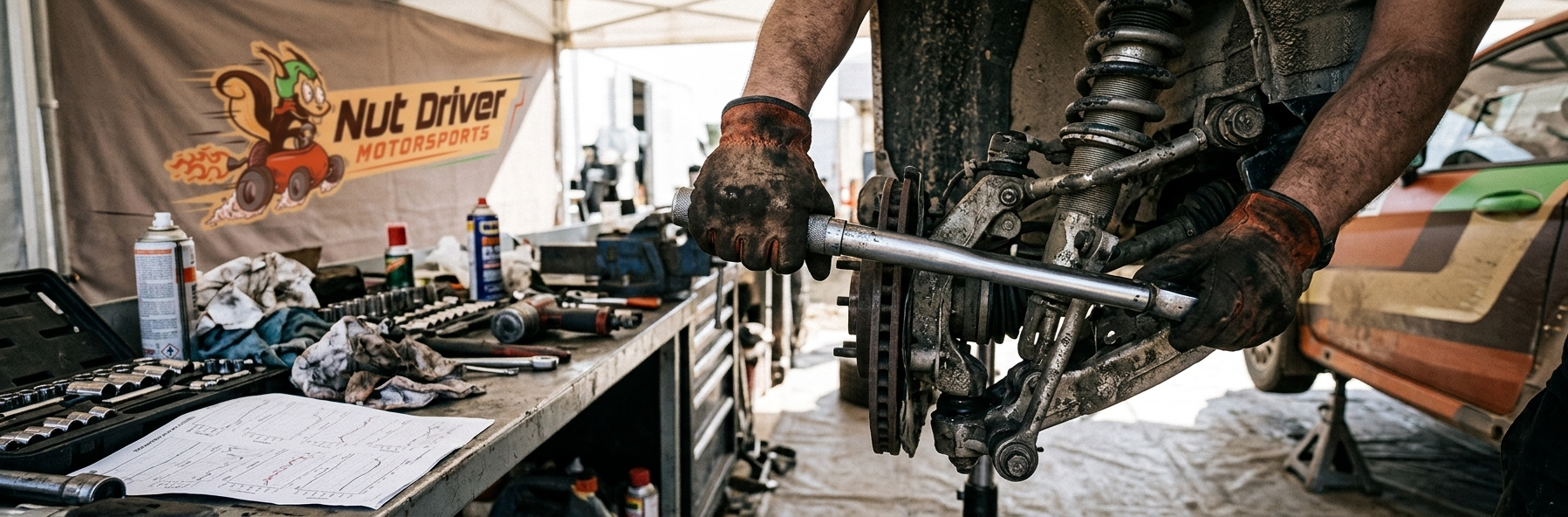
**[The iRacing Reality]** Wrenches don't lie. People do. Laurent Mekies walked into Red Bull Racing in March 2025, and instead of holding a press conference about "renewed focus" or "bridging the championship gap," he simply started fixing things. No fanfare. No leaked organizational charts to keep the paddock gossip mill fed. Just decisions—concrete, operational, unglamorous decisions that separate a team principal who *manages* chaos from one who *causes* it. Let me be clear: I don't care about F1 drama for the soap opera. I care because it's a masterclass in how high-performance teams either stay tight or fall apart under pressure—and that lesson translates directly to endurance racing, whether you're running 24 hours at Le Mans in a Hypercar or trying to survive Bathurst in an LMP3 without your suspension giving up before your concentration does. So what has Mekies *actually* done? **First: He restructured the technical org chart without torching it.** Red Bull's aero department had become a political minefield after Adrian Newey's departure was announced. Mekies didn't try to replace a legend with another singular genius (classic pay-driver thinking: throw money at a name and hope the magic follows). Instead, he flattened the reporting structure, gave more autonomy to the wind tunnel team, and empowered the simulation engineers to challenge aero decisions earlier in the development cycle. Translation: He made the feedback loop tighter. Faster iterations. Fewer expensive dead ends that only get discovered when the car hits the track and the driver radios in to say it handles like a shopping cart with one locked wheel. This is *exactly* the principle that makes a good GT3 setup process work. You don't wait until lap 47 of a stint to realize your rear anti-roll bar is too stiff and you're burning the inside shoulder of the rear tire. You simulate, you test in short runs, you listen to telemetry, and you adjust. Mekies gets that. He's an engineer first, a politician never. **Second: He killed the blame culture.** Under Christian Horner's reign, Red Bull was a Results Machine™—but also a place where every misstep got someone publicly roasted, either in the press or in a team radio broadcast to 400 million people. Mekies, by contrast, instituted a no-blame debrief protocol: when something goes wrong—strategy call, pit stop, reliability—everyone involved sits down, reviews the data, and builds a mitigation plan. No scapegoats. No theatrics. You know what that sounds like? A pit crew that actually finishes an endurance race instead of imploding at hour 18 because the tire guy and the fuel guy spent the entire stint blaming each other for a slow stop at hour 6. I've fired mechanics for less. But I've also learned the hard way that if your team is afraid to tell you the truth—"Twitch, that setup change you wanted is going to make the car a twitchy nightmare under braking"—you're going to find out the truth anyway, just a lot more expensively, probably in the form of fresh wall tats on a concrete barrier. **Third: He backed Sergio Pérez when the noise was deafening.** This one matters. By mid-2025, the "Checo Out?" discourse had reached fever pitch. Every pundit, every armchair strategist, every pay-driver with a checkbook and a dream was lining up to take that seat. Mekies looked at the data—Pérez's pace in clean air, his consistency in tire management, his role in securing Constructors' points—and said, "He stays." That's not sentiment. That's systems thinking. A team principal who manages chaos doesn't make decisions to quiet the noise; he makes decisions to win races, and he trusts the process to prove him right. You want to know the difference between a manager and a chaos generator? The chaos generator hires the driver with the biggest sponsorship portfolio and then spends the next six months explaining why the car "just doesn't suit his style." The manager hires the driver who can execute the race plan, then builds the environment where that execution is possible. **Fourth: He locked in the 2026 power unit partnership early.** Red Bull Powertrains was always going to be a gamble—taking engine development in-house after decades of customer deals. Mekies didn't wait for the regulation deadline to finalize specs. He green-lit the dyno program, aligned the integration timeline with chassis development, and made sure the cooling package and gearbox casing were designed together, not bolted on as an afterthought. This is the kind of decision that doesn't make headlines, but it's the difference between a car that finishes and a car that doesn't. It's the same reason I run my own setups instead of trusting some kid with a YouTube channel and a load cell he doesn't know how to interpret. You can't outsource integration. You can't outsource the boring, grinding work of making sure every system talks to every other system. **Fifth: He starved the circus.** No more cryptic comments to Sky Sports. No more "we'll see what the future holds" ambiguity that keeps the rumor mill spinning. Mekies gives factual updates, declines to speculate, and gets back to work. The result? Red Bull has, for the first time in years, disappeared from the gossip columns and reappeared in the engineering journals. That's the mark of a team principal who knows the job isn't to *perform* leadership—it's to *deliver* results. --- Here's what this all means if you're trying to run your own operation, whether it's in iRacing, a club race, or a full-season championship: **Tighten the feedback loop.** If you're waiting until post-race to figure out what went wrong, you're already behind. Debrief during the race. Adjust in real time. Simulate before you commit. **Kill the blame spiral.** Your spotter, your engineer, your pit crew—they need to be able to tell you the truth without fear. If they can't, you're driving blind. **Ignore the noise.** The internet will *always* have an opinion. The pay drivers will *always* think they could do it better with the right funding. Your job is to look at the data, make the call, and let the lap times speak. **Design for integration, not modularity.** You can't bolt good execution onto a bad structure. If your pedals, your wheel base, your rig, and your software aren't talking to each other cleanly, no amount of "elite hardware" is going to save you. Start with the system, not the shiniest component. **Starve the circus.** Post your lap times. Post your results. Skip the drama. The only people who *need* drama are the ones who can't deliver on track. --- Mekies isn't flashy. He's not going to show up in a gondola at the Monaco GP or leak cryptic WhatsApp screenshots to keep his name in the headlines. But six months in, Red Bull is calmer, faster, and more focused than it's been in years. That's not luck. That's leadership. And if you think that's boring, you're probably the kind of person who thinks a 24-hour endurance race is just "driving in circles." Skills over bills. Wrenches over noise. Every time. Twitch out.


